Flash Floods and Landslides in Northeast India
06/29/2026
Samuel Clifford
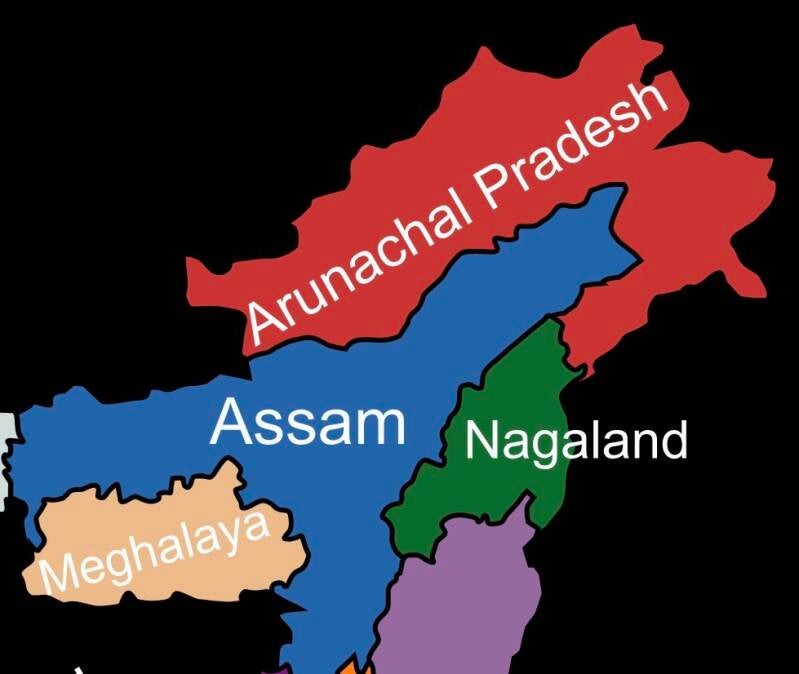
Flash floods triggered by days of relentless monsoon rainfall have caused widespread destruction across the northeastern states of Assam and Arunachal Pradesh, submerging villages, damaging infrastructure, and forcing emergency rescue operations in multiple districts. The situation began to escalate when continuous rainfall caused several rivers to overflow. In Arunachal Pradesh’s East Siang district, floodwaters surged into Ledum village after a nearby river changed its course. Roads were submerged, homes were damaged, and residents described how the sudden deluge “washed away everything.” At least ten houses were inundated, livestock were swept away, and several families had to be relocated to safer areas.
Around the same time in Assam, the Dikari River in Jonai subdivision rose sharply, inundating low‑lying areas and trapping more than 15 people on Koraibari Char, a riverine island. Nearly 100 cattle were also stranded as water levels continued to rise. Local residents alerted authorities, and preparations began to deploy State Disaster Response Force teams, though the rapidly worsening conditions slowed evacuation efforts.
As the crisis deepened, Union Home Minister Amit Shah spoke with Assam Chief Minister Himanta Biswa Sarma to review the situation. Shah, who oversees national disaster management, was briefed on the extent of flooding and ongoing relief work. Sarma later stated that the central government had assured full support. According to the Assam State Disaster Management Authority, nearly 16,000 people across 69 villages in Dhemaji district have been affected so far. Rescue operations intensified across both states. In Arunachal Pradesh’s Lower Dibang Valley district, an Indian Air Force helicopter rescued four people stranded on an island in the Sisiri River near Dambuk. In East Siang, National Disaster Response Force personnel used boats to reach stranded residents, successfully rescuing the first individual and continuing efforts despite strong currents and rising water levels.
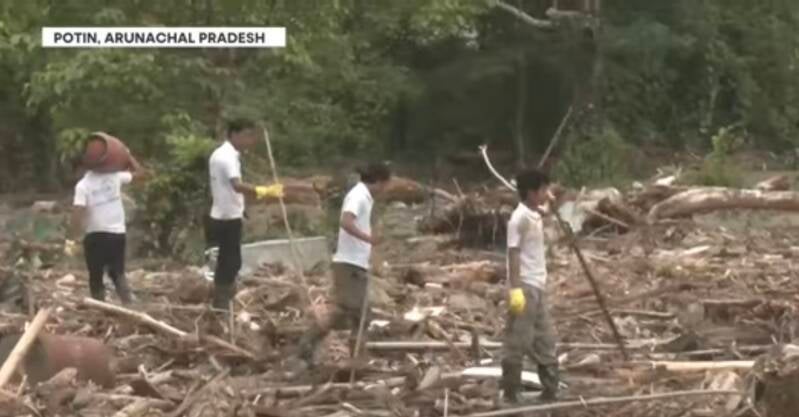
Meanwhile, landslides triggered by the heavy rain caused additional damage across Arunachal Pradesh. The Roing–Anini road in the Dibang Valley region suffered severe washouts, cutting off access at several points. In Anjaw district, a massive boulder crushed an excavator during highway construction near Sarti village, leaving the operator feared dead. Rescue efforts were halted overnight due to poor visibility and the risk of further rockfalls. Connectivity across East Siang district deteriorated rapidly. Only two of eleven major rain‑damaged roads were reopened, while key routes such as the Pasighat–Pangin and Pasighat–Mariyang–Yingkiong roads remained blocked. The approach to the Letong Bridge on the Pasighat–Runne–Takilalung road was washed away, and several other areas near schools, bridges, and river crossings became inaccessible.
In the NEEPCO colony at Poosa, flash floods destroyed or washed away around 30 houses. Nearby areas such as Possa and Pitapool saw additional homes damaged. Five people remained missing, and 60 displaced residents took shelter at a relief camp on the NEEPCO campus. In total, 128 households were affected. Rail connectivity was also disrupted. The Northeast Frontier Railway suspended services between Archipathar and Simen Chapari after severe erosion damaged a railway bridge. Authorities reported flood and landslide impacts across numerous districts in Arunachal Pradesh, including Keyi Panyor, Papum Pare, Kra Daadi, Kurung Kumey, Lower Subansiri, Kamle, Upper Subansiri, Leparada, Lower Siang, Lower Dibang Valley, and Anjaw. Rescue and relief operations were intensified across all affected regions.
The India Meteorological Department forecast continued heavy rainfall with thunderstorms over East Siang and neighboring districts. Officials urged residents to avoid travel through landslide‑prone or flooded areas unless absolutely necessary. As both states brace for more rain, emergency teams continue working to restore connectivity, evacuate stranded residents, and provide relief to thousands affected by the unfolding disaster.