Washington’s Triumph and Failure (Battle of Jumonville and Battle of Fort Necessity)
07/13/2026
Samuel Clifford
Introduction
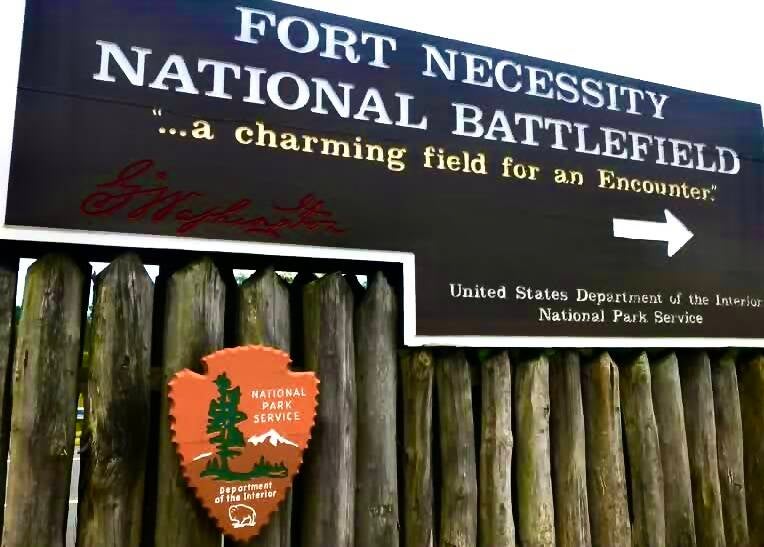
The other night I went to see Young Washington in theaters. It’s a 2026 war drama that focuses on a part of George Washington’s life many people don’t know about. When we think about George Washington we think about him leading a rebellion against the British, not about him working for the British. Yet, this movie explores the rise of George Washington and the hardships and toils that came along with this rise. One of those hardships that was very prominent in the movie was Fort Necessity. Being inspired by the movie, in this article I would like to write about the historical story of Fort Necessity.
The Ohio River Valley
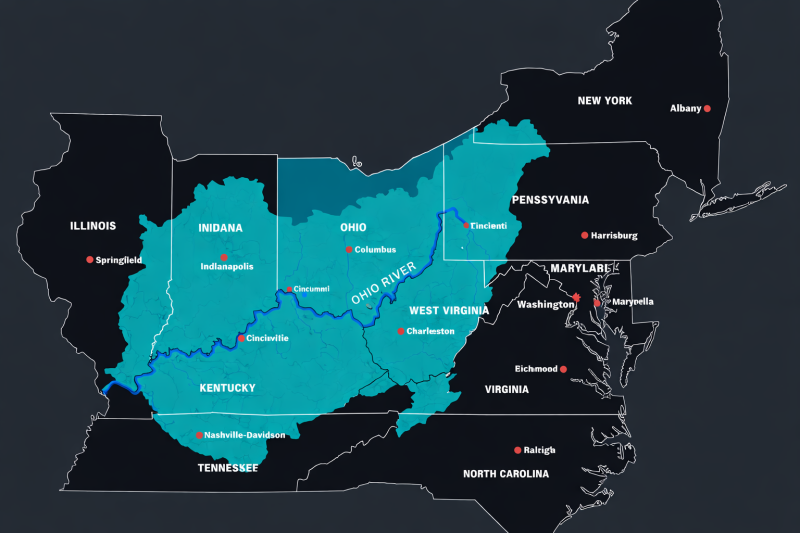
In the mid-1700s two major empires, the British and the French, were both expanding their colonial reach in North America. The French largely occupied the North in Canada while the British largely occupied the east coast. However, the French expansion south and the British expansion west inevitably led to conflict. This conflict began in a region called the Ohio River Valley. This is not the same as the Ohio we know today. The Ohio River Valley doesn’t have a single fixed political border but instead is defined geographically by the lands drained by the Ohio River and its tributaries. The Ohio River Valley covers the 203,000–203,900 square miles stretching from Pittsburgh, Pennsylvania, to Cairo, Illinois, and includes large portions of Ohio, West Virginia, Kentucky, Indiana, and Illinois, plus parts of surrounding states. The French had begun building a series of forts in this area for multiple reasons:
1. The Ohio River Valley served as a geographical link between the French’s Canadian territory and Louisiana territory.
2. To limit the British from being able to expand westward beyond the Appalachian Mountains.
Battle of Jumonville Glen
In 1754, the British governor of Virginia sought to assert control over the Ohio River Valley. He ordered George Washington to lead a militia into the area, and Washington set out in April. Washington was soon joined by Tanaghrisson, an Iroquois leader allied with the British, who urged an attack on a nearby French detachment of roughly forty to fifty soldiers. On 28 May 1754, Washington led 40 British troops and 12 Iroquois warriors to strike the French encampment commanded by Lieutenant Joseph Coulon de Villiers, Sieur de Jumonville. The British ambushed the party, and Jumonville was killed in the skirmish. This skirmish would later be known as the Battle of Jumonville Glen. Believing they had secured a decisive advantage, Washington and his men withdrew and built Fort Necessity anticipating French retaliation.
Battle of Fort Necessity
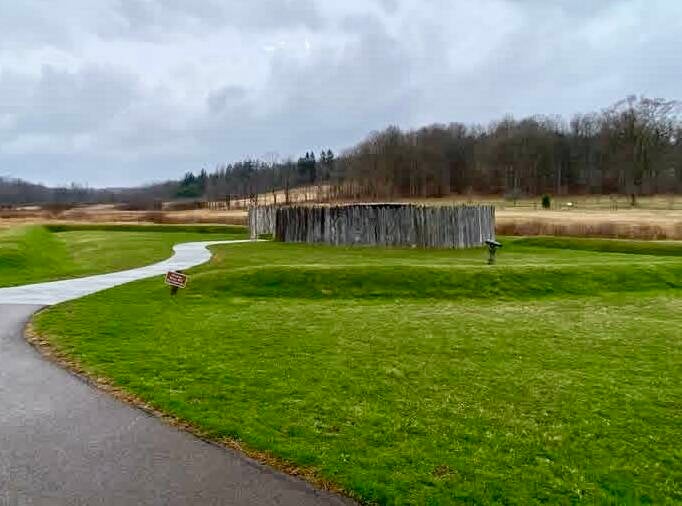
Fort Necessity was never meant to be a stronghold as Washington intended it to serve as a temporary defensive position while he waited for reinforcements and monitored French movements in the Ohio River Valley. The location Washington chose, however, was flawed from the start. The fort sat in a low, open clearing surrounded by dense woods on all sides. These woods were close enough that an enemy could fire directly into the position. Its simple circular stockade and shallow trenches offered little protection, but Washington hoped it would be enough to hold off a French response to the Jumonville Glen skirmish. That hope collapsed almost immediately when heavy rain turned the trenches into streams, soaking the ground and weakening the already fragile defenses. Washington tried to compensate for this by ordering his men to cut down trees and build makeshift breastworks, but the fort’s structural weaknesses were already becoming impossible to ignore. For context, a breastwork is a simple, quickly built defensive barrier, basically a rough wall made from whatever materials soldiers can get their hands on, usually logs, felled trees, dirt, and brush.
The officer leading the response against the British was Louis Coulon de Villiers, a Canadian officer and the half‑brother of Joseph Coulon de Jumonville, whose death in Washington’s earlier skirmish had enraged French leadership. Coulon was not simply another French commander. No, he was personally tied to the events that had sparked the conflict, and he carried both professional duty and family obligation into the campaign. Determined to both avenge his brother and prevent British expansion into French-claimed territory, he marched toward Washington’s position. Early on July 3, he reached Jumonville’s Glen and found several scalped French bodies, which he immediately ordered buried. By late morning he came within sight of Fort Necessity, where the Virginians fired a few scattered shots before retreating inside. After misjudging the fort’s location and redeploying his troops, Coulon moved his Canadians and Indian allies into the woods within musket range.
George Washington attempted to drive the French out by ordering a full assault across the open field. Captain James Mackay and his role then played a crucial role. Mackay commanded a small detachment of British regulars, professional soldiers from the Independent Company of South Carolina, who had joined Washington shortly before the battle. Unlike Washington’s Virginia militia, Mackay’s men were trained, disciplined, and accustomed to holding formation under fire. When the French and Indians charged, Mackay’s regulars obeyed Washington’s order to stand their ground and fire a volley. Supported by two swivel cannons, they inflicted casualties and briefly stabilized the line. The Virginians, however, broke and retreated, leaving Washington and Mackay’s regulars outnumbered and forcing a retreat back into the fort. The Canadians then spread out around the clearing and kept up steady fire. Washington’s men aimed too high, the swivel cannons were ineffective, and the rain continued to fall, soaking the gunpowder and making it impossible to maintain the fight.
Exhausted and running low on ammunition, Coulon feared British reinforcements and sent an officer under a white flag. Washington refused to let him enter the fort and instead sent Jacob Van Braam and another officer to negotiate. The French insisted they wanted only to avenge Jumonville’s death and prevent British settlement on French land. Inside the fort, the Virginians, against Washington’s orders, broke into the liquor supply and became drunk as negotiations continued. Coulon warned that if Washington did not surrender, the Indians might storm the fort and scalp the entire garrison. Washington agreed to the basic terms, and Coulon’s aide wrote the surrender document in French. Unable to read it, Washington relied on Van Braam’s translation, not realizing the document described Jumonville’s death as an “assassination.” Washington later insisted this was a mistranslation, but on July 4 he and Mackay signed the surrender, ending the brief and disastrous defense of Fort Necessity.
Historical Significance
The two engagements (Battle of Jumonville Glen and Battle of Fort Necessity) were the start of a wider conflict called the Seven Years War or the French and Indian War. These conflicts also served as a part of the rise of George Washington as a military leader but it also serves as a reminder that even the best of leaders sometime fail in their endeavors.