The Cruelty of Sloth World
04/30/2026
Samuel Clifford
Introduction
Animal lovers and ecological activists are shocked and appalled by the recent discoveries surrounding Sloth World, a tourist attraction in Orlando Florida. Sloth World was a proposed wildlife-themed attraction developed by entrepreneur Michael Holbrook and his company as part of a late-2025 push to launch a sloth-focused tourist destination on Orlando’s International Drive. Marketed as “the world’s first slotharium,” the project was promoted as an interactive, family-friendly experience where visitors could have close encounters with sloths and other exotic species while learning about rainforest animals. Promotional materials emphasized conservation, education, and novelty tourism, presenting the attraction as a unique addition to Orlando’s competitive entertainment market.

Image of the building of Sloth World
The Early Controversy
Sloth World received controversy consistently and it seemed to fall on deaf ears. The Sloth Conservation Foundation released this statement in January 2026 in response to inquiries about Sloth World:
“Sloths are wild mammals with complex ecological needs and no history of domestication. Extracting sloths from the wild for entertainment facilities can contribute to demand for capture and export, particularly in source countries with limited monitoring capacity, and provides no direct conservation benefit to wild populations.” (The Sloth Conservation Foundation)
Sloth World reported plans to maintain a rotating population of more than 40 sloths and to develop a breeding program to create a long‑term captive population for exhibition. Sloth World confirmed to conservation groups that its animals were wild‑caught sloths imported from Guyana and Peru for commercial display.
There are multiple problems with this model:
- Sloths face serious health issues when they are removed from their environment. Sloths rely on stable, warm, and humid rainforest climates. They cannot thermoregulate very effectively which means they cannot actively keep their internal body temperature within a safe, stable range, even when the outside temperature changes. When they are exposed to cold or fluctuating temperatures, they become hypothermic, stressed, and vulnerable to disease. Furthermore, Wild sloths experience extreme physiological stress when captured, transported, or confined and Sloths have weak immune responses outside their natural habitat.
- Their native environment is hard to replicate. Sloths are folivores that eat highly specific rainforest leaves. Replicating this diet in captivity is extremely difficult and incorrect diets can be fatal. Furthermore, Sloths spend almost 100% of their lives in trees which requires complex climbing structures, stable humidity, and consistent canopy‑level temperatures.
- Capturing wild healthy animals from their native populations and shipping them to a likely incorrect artificial environment for commercial display and profit purposes is extremely unethical. You do not harm wild populations to benefit humans. Since the animals were not rescued, and were instead captured or purchased, then the conservation label becomes a marketing tactic, not a mission. When a facility buys or displays wild‑caught sloths it makes poachers capture more and fuels the market. In other words, this business ran on exploitation, not its proposed conservation.
Latest Developments
Before Sloth World could fully open, investigators found that dozens of imported sloths had already died in warehouse conditions described as dangerously inadequate. According to Florida wildlife records, sloths shipped from Guyana and Peru were reportedly kept in a building lacking proper heat, running water, and suitable tropical habitat, leading at least 31 animals to die initially, many from suspected “cold stun” during winter temperatures. Reports and public outrage have since pushed the estimated death toll beyond 50 as more details emerge.
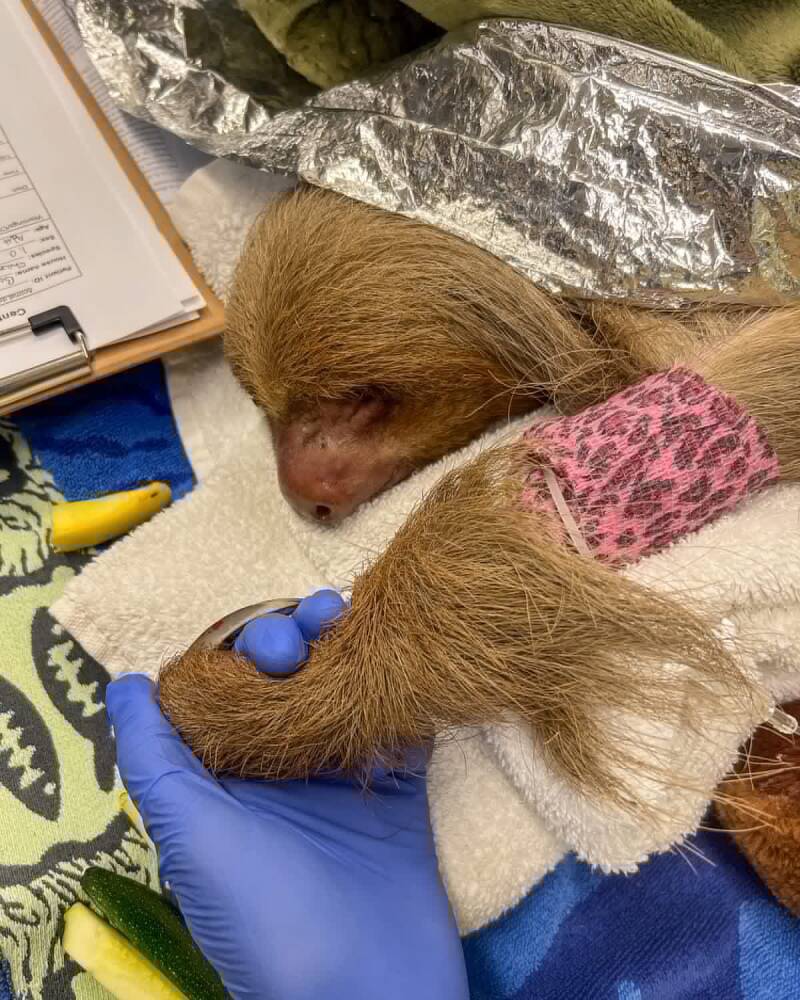
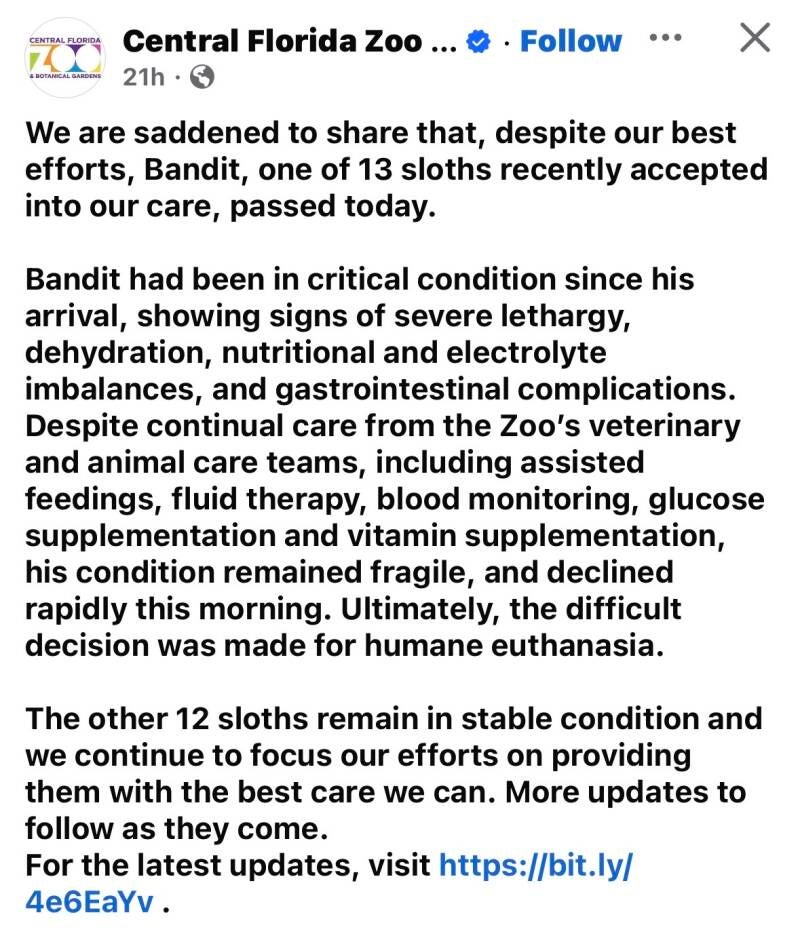
The scandal deepened this week when Bandit, one of 13 surviving sloths rescued from the facility and transferred to the Central Florida Zoo, died despite intensive veterinary care. Zoo officials said Bandit arrived in the worst condition of the rescued animals, suffering from severe dehydration, malnutrition, lethargy, gastrointestinal issues, and electrolyte imbalances. His death, just days after rescue, became a heartbreaking symbol of the broader neglect allegations surrounding Sloth World and intensified questions about how such a large-scale exotic animal operation was allowed to continue despite mounting losses.
Public reaction has been swift and furious. Customers have demanded refunds, animal advocates have condemned the commodification of vulnerable wildlife, and social media users have called for criminal accountability. Florida State Rep. Anna Eskamani has formally urged state and federal authorities to launch a criminal investigation into Sloth World’s ownership and management, while broader concerns are growing over possible regulatory failures involving wildlife permits, import oversight, and enforcement gaps. For many Floridians, Bandit’s death transformed the story from a shocking business failure into a larger call for reform in how exotic animals are imported, housed, and exploited for entertainment.
As the remaining rescued sloths continue recovering under quarantine and treatment, the collapse of Sloth World has become a cautionary tale about profit-driven exotic animal tourism. What was marketed as an educational “slotharium” is now under bankruptcy plans, public condemnation, and political scrutiny, with many hoping the tragedy will lead to stronger protections so similar neglect cannot happen again.
Sources:
The Sloth Conservation Foundation. “Sloth Conservation Organizations Warn Against U.S. Attraction Sourcing Wild-Caught Sloths for Commercial Entertainment.” Sloth Conservation Foundation, 21 Jan. 2026, www.slothconservation.org/blog/statement-on-sloth-world-orlando
“Bandit, Bound for Sloth World Attraction, Dies after Rescue, Zoo Says.” WESH 2 News, 29 Apr. 2026, https://www.wesh.com/article/bandit-bound-for-sloth-world-attraction-dies/71166133. Accessed 30 Apr. 2026.
González, Katie. “Lawmaker Calls for Criminal Investigation after Sloth Dies Following Rescue from Orlando Attraction.” ClickOrlando (News 6 WKMG), 30 Apr. 2026, https://www.clickorlando.com/news/local/2026/04/30/lawmaker-calls-for-criminal-investigation-after-sloth-dies-following-rescue-from-orlando-attraction/. Accessed 30 Apr. 2026.
Miller, David. “Orlando Sloth World Death Count Rises, Customers Demand Refunds.” FOX 35 Orlando, 29 Apr. 2026, https://www.fox35orlando.com/news/orlando-sloth-world-death-count-rises-customers-demand-refunds. Accessed 30 Apr. 2026.
“Sloth World: The World’s First and Only Slotharium Coming to International Drive Early 2026.” Visit Florida Media, late 2025 promotional release, www.visitfloridamedia.com. Accessed 30 Apr. 2026.
Images of Animal Care Specialist Dr. Hailey Straub working with the sloths:
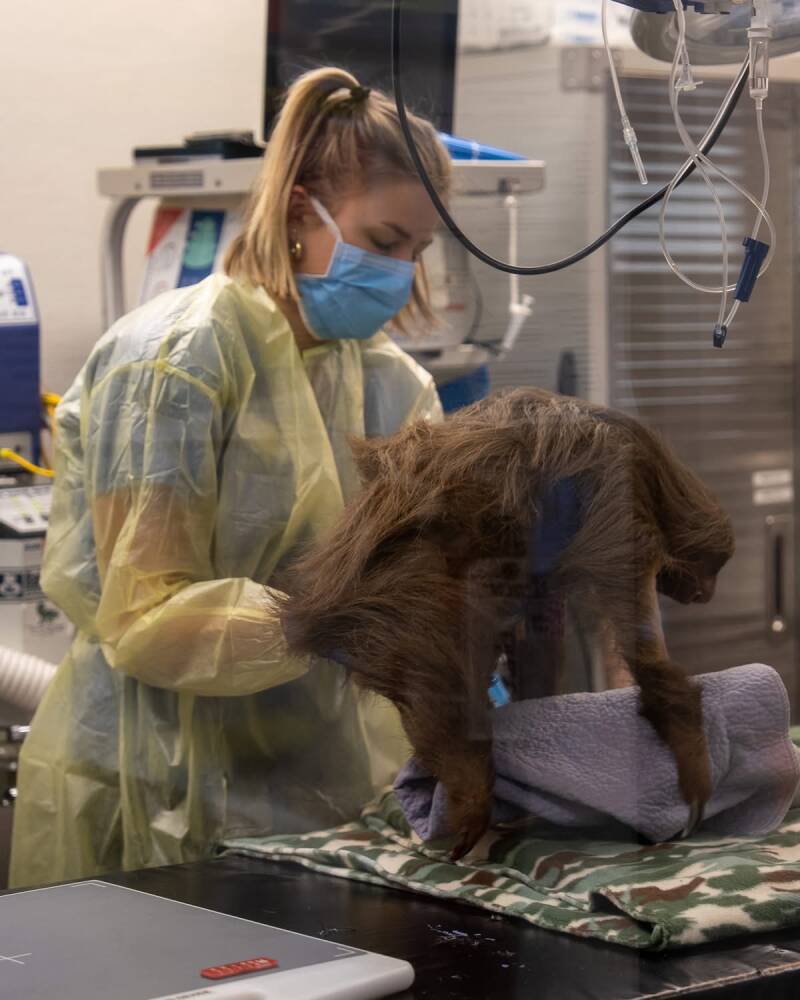
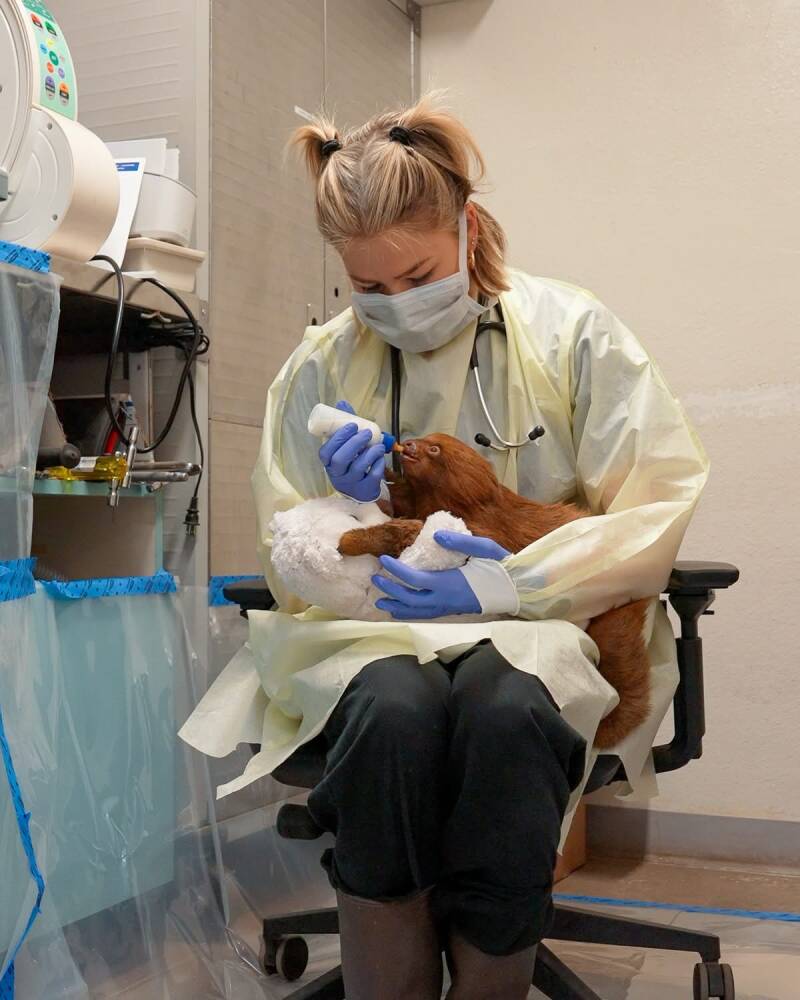
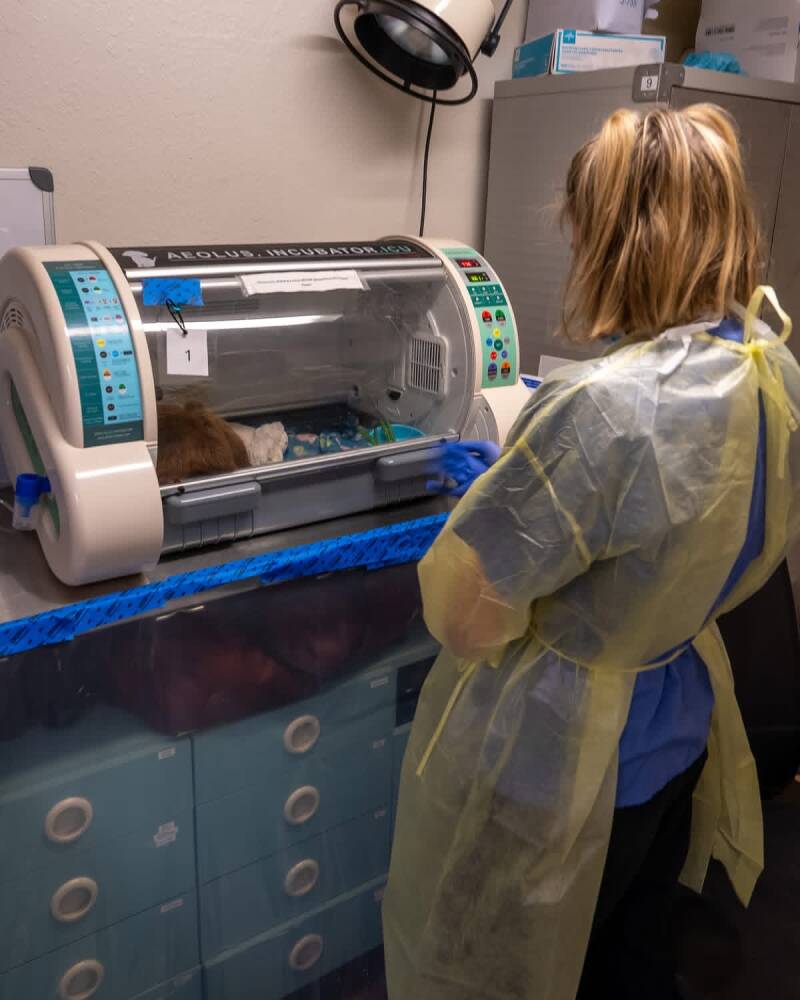
The Central Florida Zoo welcomed 13 of these Linnaeus's Two-Toed Sloths (Choloepus didactylus) in hopes of nursing them back to health.